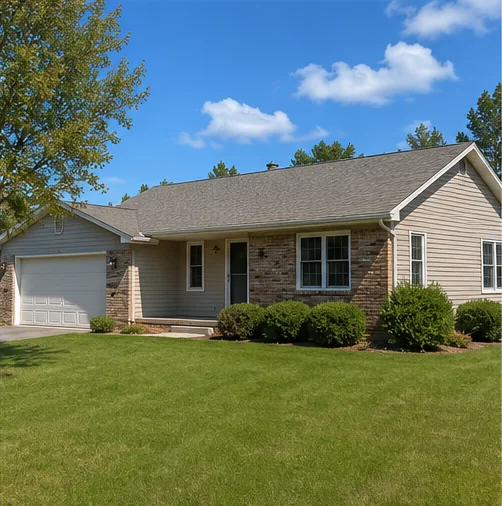
Buying new construction in Coon Rapids feels like the safe choice. The drywall is crisp, the furnace has never run a winter, and the builder hands you a warranty packet thick enough to feel reassuring. But "new" is not the same as "flawless." Coon Rapids sits on the Anoka sandplain along the Mississippi River in the northern Twin Cities metro, where infill lots squeeze new homes between 1960s-80s ramblers, fast-draining sandy soils complicate grading, and radon climbs out of the ground year-round. Builders here work fast, and municipal code inspectors check for compliance, not quality. They are not your inspector. This guide walks you through what actually goes wrong on new Coon Rapids builds, how Anoka County conditions shape the risks, and where an independent phase inspection pays for itself many times over before you ever close.
In this guide
Why a Brand-New Coon Rapids Home Still Needs Your Own InspectorAnoka Sandplain Soils, Grading, and Foundation DrainageRadon: The Coon Rapids Risk Builders Often Skimp OnRoofing, Storms, and the Minnesota Winter Your New Home Hasn't Survived YetMechanicals, Furnaces, and Electrical Panels in New BuildsPlumbing, Sewer Laterals, and What Lies UndergroundWhy a Brand-New Coon Rapids Home Still Needs Your Own Inspector
There is a persistent myth that new construction does not need a private home inspection because the City of Coon Rapids already inspected it. Municipal inspectors do important work, but they are spread thin across an entire building department, they spend minutes per visit, and they verify minimum code compliance, not craftsmanship or long-term performance. A city inspector confirms the framing meets span tables; they do not crawl the attic checking whether the HVAC subcontractor crushed a flex duct or left bath fans venting into the insulation. On the Anoka sandplain, builders also push schedules hard during the short Minnesota framing season, and rushed trades make mistakes. An independent inspector works only for you. They have no relationship with the builder, no incentive to wave anything through, and time to actually open panels, run every fixture, and document defects with photos you can attach to a punch list. In a new Coon Rapids build, the most valuable inspection is often the pre-drywall (phase) inspection, when framing, wiring, plumbing, and mechanicals are still visible. Catching a missing joist hanger or a reversed-slope drain line then is a five-minute fix. Catching it after closing, behind finished walls, becomes your expensive problem.
Anoka Sandplain Soils, Grading, and Foundation Drainage
Coon Rapids sits on the Anoka sandplain, a broad deposit of sandy, fast-draining soils left by glacial outwash. That sounds like good news for foundations, and in some ways it is, but it creates specific new-construction risks. Sandy fill is easy to move and easy to leave poorly compacted. When a builder backfills against a fresh foundation with loose sand, that soil settles over the first few seasons. If the final grade was sloped correctly at handoff but the backfill sinks, you end up with negative grade pulling snowmelt and rain straight toward the foundation. On riverfront and low-lying lots near the Mississippi and Coon Creek, seasonal high water tables raise the stakes further. Check that the lot slopes a visible six inches over the first ten feet away from the house on all sides, that downspouts carry water well past the foundation rather than dumping at the corner, and that any window wells have functioning drains. Inspect the sump system carefully: a high water table means the pump will actually run, and a builder-grade pump with no battery backup is a flood waiting for the next storm-season power outage. These are inexpensive fixes during construction and miserable ones after a finished basement floods.
Radon: The Coon Rapids Risk Builders Often Skimp On
Anoka County, including Coon Rapids, sits in a part of Minnesota with consistently elevated indoor radon. The sandy, permeable sandplain soils that drain so well also let radon gas migrate easily into homes. The Minnesota Department of Health reports that the average Minnesota home tests well above the EPA action level of 4.0 picocuries per liter, and northern-metro readings frequently run higher. Minnesota requires passive radon-resistant construction in new homes, which means your new Coon Rapids build should have a sub-slab vent pipe running from beneath the basement floor up through the roof. The catch: passive systems alone often fail to bring levels below the action level, and many builders install the pipe but never test the result. A passive stub also frequently lacks the fan that turns it into an active mitigation system. Insist on a radon measurement test before closing, ideally a 48-hour continuous monitor placed on the lowest livable level. If the result exceeds 4.0 pCi/L, the fix is straightforward: add an inline fan to the existing passive pipe, typically a few hundred dollars, far cheaper and cleaner to negotiate before you own the home than after. Never assume new construction means safe radon levels in this part of Anoka County.
Roofing, Storms, and the Minnesota Winter Your New Home Hasn't Survived Yet
Your new Coon Rapids roof has never faced a Minnesota winter or a summer hailstorm, and the northern Twin Cities metro gets plenty of both. The risk on new construction is not age, it is workmanship and design. Ice dams form when attic heat melts snow that refreezes at the cold eave, and on new builds the culprits are almost always recessed lights that leak air, bath fans that dump warm moist air into the attic instead of outside, gaps in attic insulation, and blocked soffit vents that were stuffed with insulation during a rushed install. A proper inspection confirms continuous soffit-to-ridge ventilation, full insulation depth at the eaves with baffles holding it back from the vents, and that every bath and kitchen fan terminates through the roof or wall, never into the attic. Flashing is the other new-build weak point: check step flashing at walls, kick-out flashing where roofs meet siding, and sealed boots around every vent penetration. Anoka County also sees hail and high-wind storms that can damage even a months-old roof, so document the roof's condition at inspection so you have a baseline. A well-built, well-ventilated roof prevents the ice dams and interior water staining that plague so many northern-metro homes within their first few winters.
Mechanicals, Furnaces, and Electrical Panels in New Builds
New construction usually means a new furnace, so you would not expect the cracked heat exchanger problem that haunts older Coon Rapids ramblers and split-levels. True, but new HVAC has its own failure modes. The most common is poor installation: undersized or crushed flex ducts, missing dampers, no condensate drain trap on the high-efficiency furnace, or a system never properly balanced so back bedrooms freeze while the main floor roasts. Have the inspector run a full heating and cooling cycle and check static pressure and duct routing. On the electrical side, you should not see the Federal Pacific (FPE) or Zinsco panels that are flagged in older homes, those are legacy hazards from mid-century construction, but verify the new panel is a reputable brand, properly labeled, with correct breaker sizing, no double-tapped breakers, and AFCI and GFCI protection where code requires it. If you are buying a teardown-rebuild or a heavily renovated older home marketed as 'like new,' do confirm the old fuse box or obsolete panel was actually replaced and not just rewired around. Water heater venting, gas line sediment traps, and proper combustion air for the mechanical room round out the list of things that get rushed and missed during the final push to close.
Plumbing, Sewer Laterals, and What Lies Underground
Plumbing defects in new Coon Rapids homes split into two categories: what the builder installed, and what was already in the ground. For the new work, your inspector should run every fixture, check for proper venting, confirm shutoffs at each supply, look for slow or reverse-slope drain lines, and test water pressure, which can run high on municipal supply and needs a regulator to protect fixtures. The bigger surprise hides underground. If your new home was built on a redeveloped infill lot, the sewer lateral connecting the house to the city main may be original, decades-old clay pipe, even though the house above it is brand new. Clay sewer laterals are notorious in older Anoka County neighborhoods for root intrusion, where tree roots find the joints and slowly choke the line until it backs up into your new basement. A standard inspection does not include a sewer scope, but on any infill or rebuild lot it is the single smartest add-on you can buy. A camera run from the cleanout to the main reveals root intrusion, cracks, offsets, and bellies before you own them. Replacing a collapsed clay lateral is a five-figure dig-up; finding it during your inspection turns it into a negotiating point with the builder or seller.
Quick checklist
- Schedule a pre-drywall (phase) inspection while framing, wiring, plumbing, and mechanicals are still exposed
- Verify final grade slopes about six inches over the first ten feet away from the foundation on all sides, and that loose sandy backfill hasn't settled into negative grade
- Test radon with a 48-hour continuous monitor and confirm the passive sub-slab pipe can accept a fan if levels exceed 4.0 pCi/L
- Confirm continuous soffit-to-ridge attic ventilation, full insulation at the eaves with baffles, and that all bath/kitchen fans vent outside
- Run full heating and cooling cycles and check duct routing, condensate trap, and room-to-room balance
- Verify a reputable, correctly labeled electrical panel with proper AFCI/GFCI protection and no FPE, Zinsco, or leftover fuse box on rebuild lots
- Add a sewer scope on any infill or teardown-rebuild lot to check old clay laterals for root intrusion, cracks, and bellies
- Inspect the sump pump and recommend a battery backup given high water tables near the Mississippi and Coon Creek
- Test every plumbing fixture, water pressure, and shutoffs, and confirm a pressure regulator where supply runs high
- Document the new roof's baseline condition and flashing so you can prove storm or hail damage later
Don't let a fresh coat of paint stand in for an honest inspection on your Coon Rapids new build. Build your free instant quote online in under a minute and lock in an independent phase or pre-closing inspection that catches the costly problems before they become yours.
Run Your Instant Quote