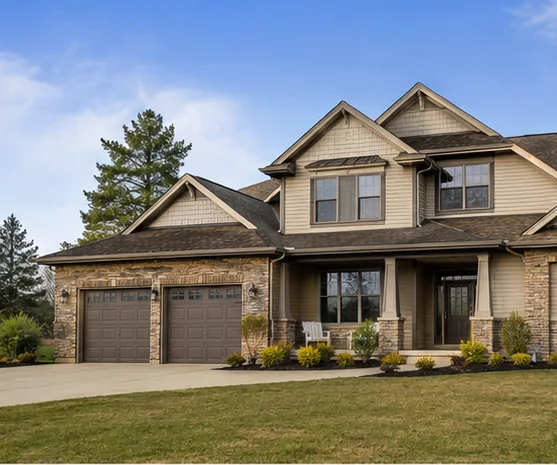
Coon Rapids sits in the open, wind-exposed terrain of southern Anoka County, where the Mississippi River corridor and the flat Anoka sandplain give summer storms a long, unobstructed run at your roof. Spring and summer bring the classic upper-Midwest combination: fast-moving supercells off the western prairie, straight-line winds, and hail that can range from pea-size to softball. Winter then layers on ice dams that quietly punish the same shingles all over again. If you own one of the area's many 1960s-to-1980s ramblers and split-levels, or a riverfront home off Egret or Coon Rapids Boulevard, roof damage is rarely a question of if but when. This guide explains what storm and hail damage actually looks like here, how it interacts with the rest of an aging Coon Rapids home, and how to get clear answers before you buy, sell, or file a claim.
In this guide
Why Coon Rapids Roofs Take a BeatingWhat Hail Damage Actually Looks LikeIce Dams: The Winter Half of the StoryHow Roof Problems Cascade Through an Aging HomeStorm Damage, Insurance, and Buying or Selling HereWhat a Thorough Roof and Storm Evaluation CoversWhy Coon Rapids Roofs Take a Beating
Geography works against roofs here. Coon Rapids spreads across the flat, sandy Anoka sandplain with the Mississippi River forming its western and northern edge. There is little terrain or mature forest canopy in the newer subdivisions to slow the wind, so when a severe thunderstorm line rolls in from the west, gusts hit roofs broadside. The northern Twin Cities metro sits squarely in the corridor that catches both the tail end of prairie supercells and the pop-up storms that build over the warm afternoon sandplain. Hail is the headline event, but straight-line wind does just as much damage by lifting and creasing shingle tabs, especially on the exposed south and west slopes. Most Coon Rapids housing stock dates to the 1960s through 1980s building boom, which means a large share of roofs are on their second or third shingle layer, sometimes laid over old organic-mat shingles that have lost their flexibility. Riverfront homes along the bluffs near Bunker Lake Boulevard and the river add humidity and freeze-thaw stress. The combination of open exposure, aging roofs, and repeated storm cycles is exactly why a careful roof evaluation matters more here than in a sheltered, newer development.
What Hail Damage Actually Looks Like
Homeowners often expect hail damage to be obvious, but on asphalt shingles it is usually subtle and easy to miss from the ground. True hail bruising shows up as soft, round impact marks where the granules have been knocked off and the underlying asphalt mat is exposed, often with a spongy feel when pressed. Fresh hits look darker because the protective granules are gone, leaving the shingle vulnerable to UV breakdown and accelerated aging. On a Coon Rapids roof, the heaviest hits typically land on the north and west slopes that face incoming storms, and on soft metals like aluminum gutters, downspouts, fascia wraps, and roof vents, where dents are the easiest confirmation that hail was large enough to matter. It is important to separate genuine hail damage from look-alikes: blistering from heat, mechanical scuffing from foot traffic, granule loss from normal aging, and manufacturing defects all mimic hail to an untrained eye. The age of the roof drives the cost conversation; a ten-year-old laminated shingle that took a beating may be repairable, while a brittle thirty-year-old roof on an original split-level may be at the end of its life regardless. A thorough inspection documents impact density per slope so you understand whether you are looking at cosmetic wear or a functional, claim-worthy loss.
Ice Dams: The Winter Half of the Story
Storm damage in Coon Rapids is a two-season problem, and ice dams are the cold-weather counterpart to summer hail. They form when heat escaping through the attic melts snow on the upper roof, the meltwater runs down to the cold eave and refreezes into a ridge of ice, and trapped water then backs up under the shingles. The 1960s-to-1980s homes common here were built with shallow attic insulation, marginal soffit-to-ridge ventilation, and sometimes no ice-and-water shield membrane at the eaves, because code did not require it when these roofs were originally framed. Split-levels and ramblers with long low-slope sections and complex roof-to-wall intersections are especially prone to dams, and any roof that has lost granules to hail sheds water less effectively, compounding the risk. The damage shows up as interior ceiling stains, peeling paint along exterior walls, soaked attic insulation, and rotted fascia and soffit. A good inspection ties these clues together: it checks attic insulation depth and air sealing, looks for bypasses around can lights and bath fans that leak warm air, evaluates ventilation balance, and inspects the underside of the roof deck for staining and active or past moisture. Treating ice dams as a one-time roof repair without addressing attic heat loss simply guarantees they return.
How Roof Problems Cascade Through an Aging Home
A roof never fails in isolation, and in a typical Coon Rapids home a leak quickly becomes someone else's problem. Water that gets past damaged shingles travels along framing and shows up far from its entry point, staining drywall, soaking insulation, and feeding mold in the cool, humid conditions found in many local basements and crawlspaces. On the sandy, well-draining Anoka sandplain soils, surface water generally moves away from foundations, but chronic roof runoff dumping at the same spot can still saturate the ground near the wall and contribute to seepage. The mechanical systems get pulled in too. A persistent roof leak near a chimney chase can corrode the flue serving an aging furnace, and homes of this era often already carry a cracked furnace heat exchanger, an electrical panel that may be a problematic Federal Pacific or Zinsco unit, or an original fuse box, plus elevated radon that the sandplain is known for. None of those are caused by the roof, but a buyer who only chases the visible water stain misses the bigger picture. This is why a full home inspection beats a roof-only look: it connects the roof to the attic, the attic to the living space, and the whole envelope to the systems that keep the house safe and dry.
Storm Damage, Insurance, and Buying or Selling Here
Storm and hail claims shape a lot of real estate decisions in the northern metro, and getting the sequence right protects you. If you are buying a Coon Rapids home, ask whether the roof has an open or recently settled insurance claim, whether a full replacement or a patch was done, and whether permits were pulled, since Anoka County and the city require permits for reroofing. A roof that was only partially replaced after a storm can leave you with mismatched shingles and a shortened remaining life on the untouched slopes. Sellers benefit from documenting any storm repairs and keeping receipts, because an undisclosed history of leaks is a common source of post-closing disputes. An independent inspection is deliberately neutral; the inspector does not sell roofs or file your claim, so the report reflects condition rather than a sales pitch. The report gives you slope-by-slope documentation, photos of impact marks and flashing, an honest read on remaining service life, and a record of any interior or attic moisture evidence. That documentation becomes leverage in negotiation, a baseline for an insurance conversation, and a checklist for budgeting. Costs vary widely with shingle layers, roof pitch, square footage, and access, so reputable evaluations give you the factors that drive price rather than a guess pulled from thin air.
What a Thorough Roof and Storm Evaluation Covers
A meaningful evaluation in Coon Rapids goes well beyond a walk around the yard with binoculars. The inspector assesses each accessible slope for hail bruising, wind-creased and lifted tabs, granule loss, and the condition of the shingle mat, noting which faces took the brunt of recent storms. Flashing gets close attention at chimneys, plumbing boots, skylights, valleys, and roof-to-wall transitions, since these are the leak points that storms and ice dams exploit first. Soft metals like gutters, downspouts, and vents are checked for hail dents that confirm impact size. From inside, the attic is inspected for daylight, deck staining, mold, compressed or thin insulation, blocked soffit vents, and air-sealing failures around fixtures that drive ice dams. Interior ceilings and the tops of exterior walls are reviewed for the telltale stains of past or active leaks. A strong report documents all of this with photos, distinguishes cosmetic from functional damage, estimates remaining service life, and flags whether the findings warrant a roofing contractor's bid or an insurance adjuster's visit. Because roof problems travel, the evaluation is most useful as part of a whole-home inspection that also looks at the furnace, electrical panel, plumbing, and radon risk common to homes of this age and area.
Quick checklist
- Walk the property after every major storm and look for shingle pieces, granule washout in gutters, and dents in aluminum gutters, downspouts, and vents.
- Check north and west roof slopes first, since these face most incoming Coon Rapids storms and take the heaviest hail.
- Inspect ceilings and the tops of exterior walls for new brown stains that signal a leak or past ice dam.
- In winter, watch the eaves for thick ice ridges and icicles, which point to attic heat loss, not just cold weather.
- Verify attic insulation depth and that soffit vents are not blocked, since both drive ice dam formation on older roofs.
- Ask sellers for reroof permits, insurance claim history, and receipts before you buy a storm-prone home here.
- Separate cosmetic wear from functional damage; brittle thirty-year-old shingles may need replacement regardless of hail.
- Don't treat the roof in isolation; have the attic, furnace flue, electrical panel, and radon risk evaluated together.
- Document everything with dated photos to support both insurance conversations and purchase negotiations.
- Schedule a professional evaluation before filing a claim so you know whether the loss is real and claim-worthy.
If you are buying, selling, or just storm-worried in Coon Rapids, get clear answers before the next severe weather rolls through. Build your free instant quote online in under a minute and schedule an independent, no-pressure roof and whole-home evaluation tailored to Anoka County homes.
Run Your Instant Quote