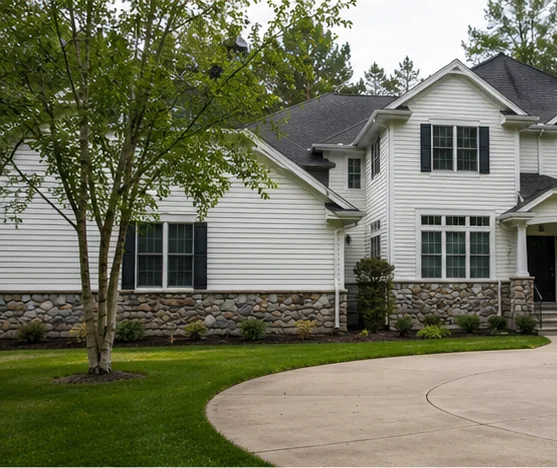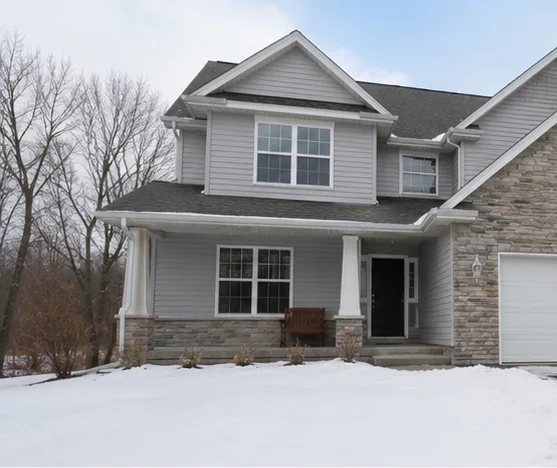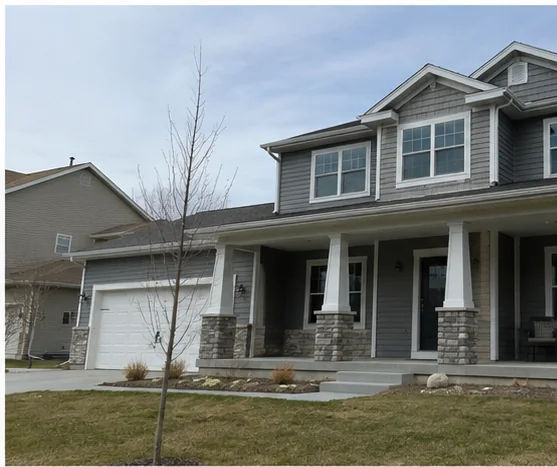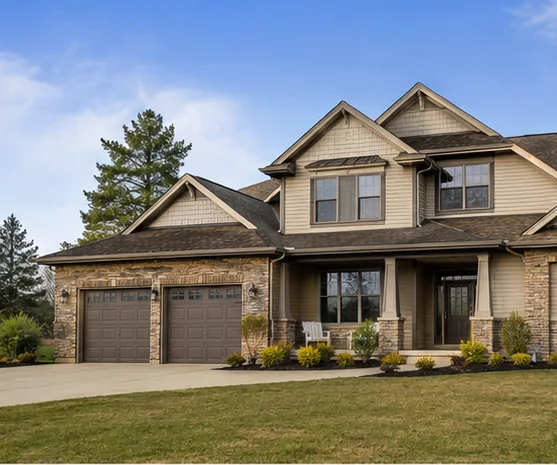
Riverdale anchors the northwest corner of Coon Rapids near US Highway 10 and Round Lake Boulevard, built largely on former farmland that filled in from the late 1980s through the 2000s. It is one of the newest residential pockets in the city, mixing two-story single-family homes, townhomes, and association communities clustered around the Riverdale commercial district and the former Northstar rail station. Buyers here face a different inspection profile than the older south end of the city, but the Anoka sandplain underneath is the same, and newer construction carries its own recurring issues.
Most Riverdale homes were framed between roughly 1988 and 2006, which puts them in a modern construction era: vinyl siding, asphalt architectural shingles, high-efficiency forced-air furnaces, and poured concrete foundations rather than the block foundations common in older Coon Rapids. That generally means fewer of the legacy electrical problems found elsewhere in the city. You are unlikely to find a Federal Pacific or Zinsco panel in Riverdale; most homes have modern breaker panels with copper branch wiring. The more common findings here are workmanship and wear items that surface 15 to 35 years after a building boom.
Roofing is the headline concern. Because so many Riverdale roofs went on within a few years of each other, large neighborhoods reach the end of shingle life around the same time, and Anoka County sees periodic hail and high-wind storms that can bruise or tear shingles well before that. An inspector should document granule loss, exposed mat, lifted ridge caps, and any storm bruising, since insurance claims and replacement timing matter at purchase. Ice dams also appear on the steeper, more complex rooflines common to two-story Riverdale homes; check attic insulation depth, baffles, and bathroom and kitchen vent terminations that should exit the roof or wall rather than dumping into the attic.
The sandplain soil drains well, which helps with wet basements, but it does not eliminate them. Walkout and lookout lots near retention ponds and the Sand Creek corridor can see seasonal high water tables, so sump pumps, drain tile discharge, and grading away from the foundation deserve real attention. Radon is the quieter risk: Anoka County sits in a high-radon zone, and even newer homes routinely test above the EPA action level of 4.0 pCi/L. Many Riverdale homes were built before passive radon rough-ins were standard, so a measurement test is worth requesting.
On mechanicals, furnaces and water heaters installed during original construction are now reaching or passing typical service life. Have the heat exchanger and combustion evaluated, and confirm the water heater is not original. In townhome and association areas, ask what the HOA covers versus the unit owner, because roofs and siding are often shared but interior systems are not.
A thorough inspection in Riverdale focuses on roof and storm condition, attic ventilation, drainage on pond-adjacent lots, and aging original mechanicals. Knowing those answers before closing protects your offer and your budget.
Get started in minutes: build your free, no-obligation inspection quote online and see pricing for your Riverdale home instantly.
Run Your Instant Quote